Self-managed strata, without holding it all in your head.
In a self-managed strata scheme, the owners run the building without a strata managing agent. The committee organises the meetings, money, insurance, maintenance and records, and the owners make the decisions together. Here is what that involves through the year, and how to share it so nothing depends on one person’s inbox.
Watch self-managed strata explained in two minutes: who does the work, and the four jobs that come round every year.
What does self-managed strata mean in NSW?
Every lot owner is a member of the owners corporation. In a self-managed scheme there is no strata managing agent. Owners elect a strata committee at the annual general meeting, and the committee and its office bearers, the chairperson, secretary and treasurer, carry out the day-to-day work. Some decisions can only be made by the owners at a general meeting.
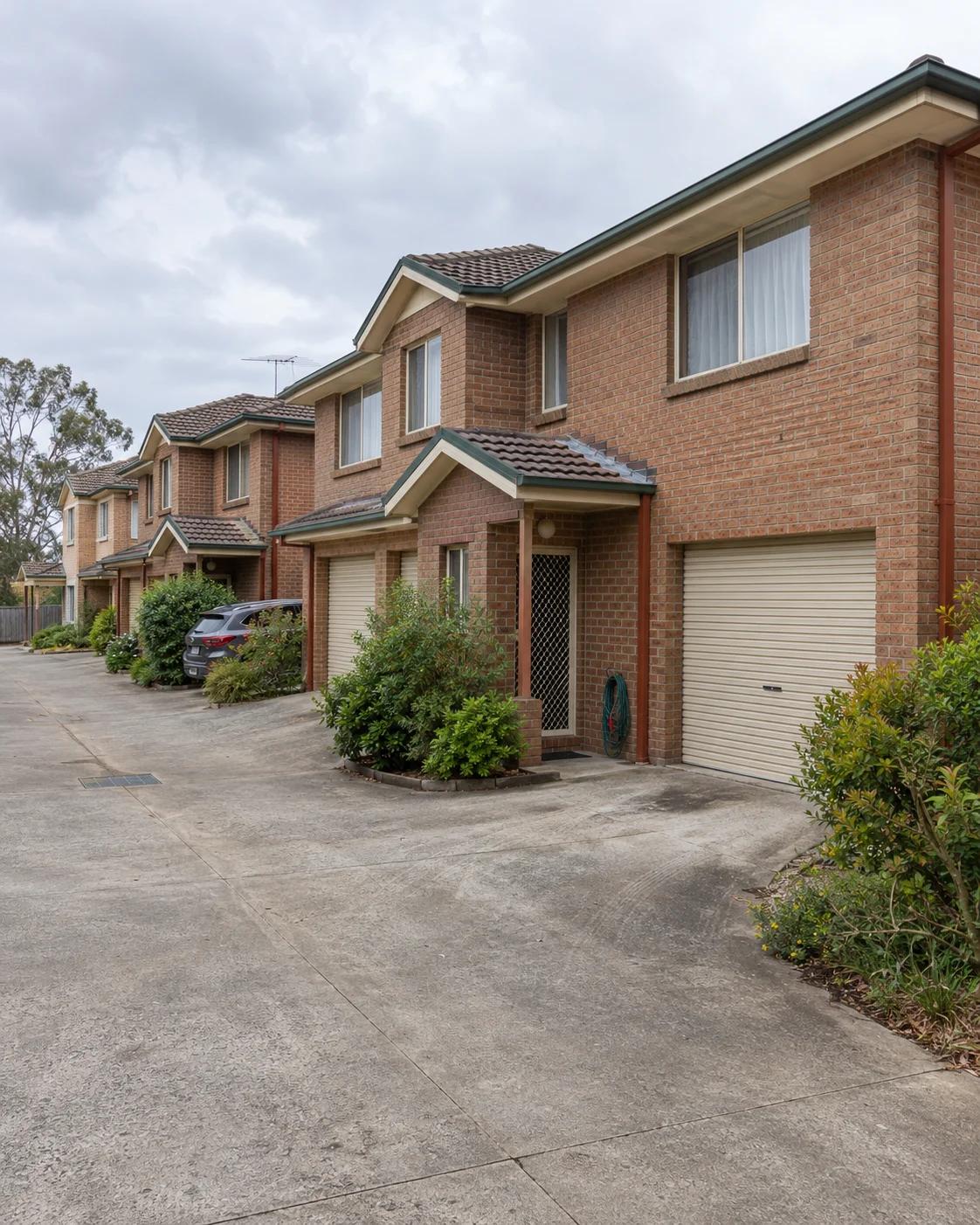
The duties stay the same.
Not having a managing agent changes who does the work, not what has to be done. Insurance, meetings, levies, records, repairs and any required reporting remain the owners corporation’s responsibility.
The work needs more than one person.
Agree who handles correspondence, meetings, money and maintenance follow-up, and who covers when someone is away or steps down. Keep the records with the building, so the next committee can pick them up.
NSW does not generally require a professional strata manager. Owners still have duties, and a compulsory management order can change what your scheme is able to do. Read the NSW guide to strata roles.
What does a self-managed strata committee need to organise?
Four jobs come round every year: meetings, money, insurance and the building, and records and reporting. Allocate responsibility for each one and check the requirements that apply to your scheme. Each job below has a free tool to get it started.
- 01 / Meetings
Meetings and decisions.
Hold an annual general meeting every year, with at least 14 days’ written notice to every owner. Bring the agenda, papers and motions together, allow time to prepare, and send the minutes to owners within seven days of the meeting.
Free tool · No account neededBuild your meeting agendaPlan an AGM, general meeting or committee meeting in five steps. It adds the items NSW requires, works out the notice deadline and drafts the motions, with a minutes template for the day.
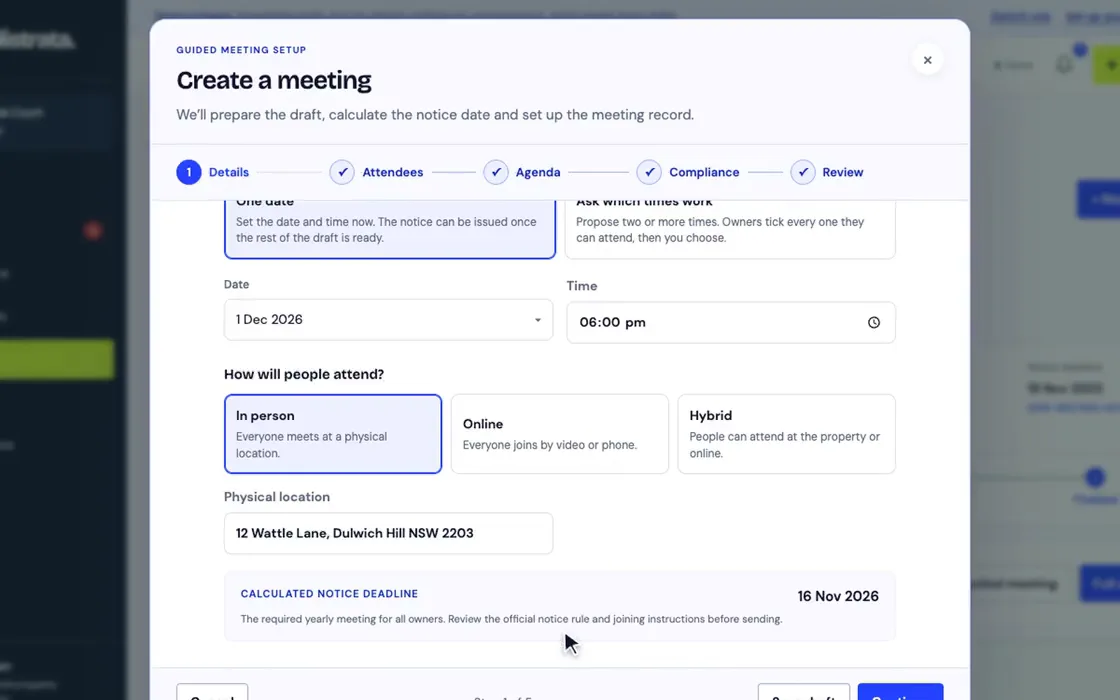
Screen recording · 14 secSetting up an annual general meeting Choose the meeting type, set the date and place, and the notice deadline is worked out for you to check.
Recorded in Jacaranda Court, our fictional six-lot demo building. People and figures are sample data. - 02 / Money
Bills, budgets and levies.
Set a budget for the administrative fund and the capital works fund, raise the levies owners agree to, and pay the bills from a bank account in the owners corporation’s own name. Keep track of which bills need review, who approved them and what has been paid.
Free tool · No account neededDraft your strata budgetAdd up a year of everyday costs, list the major works ahead and see whether your capital works fund will cover them over ten years.
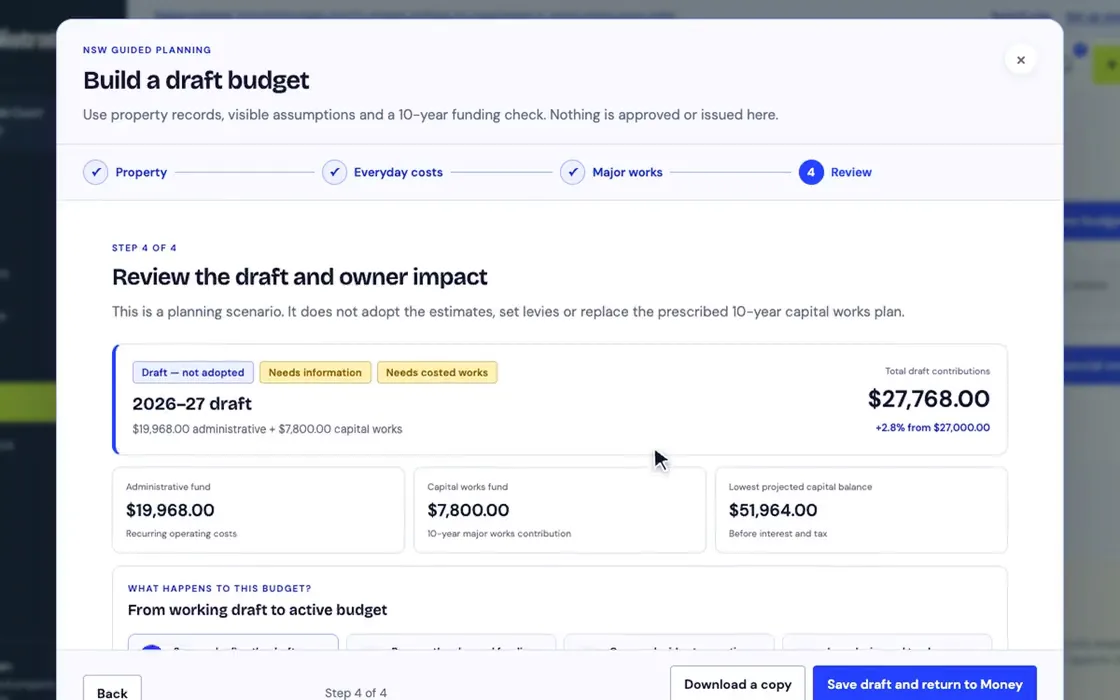
Screen recording · 16 secReviewing a draft budget See each fund, the total and the estimated contribution for every lot. It stays a draft until owners decide at a meeting.
Recorded in Jacaranda Court, our fictional six-lot demo building. People and figures are sample data. - 03 / Building
Renewals and building work.
Renew the building insurance, keep up with repairs and maintenance, and arrange the annual fire safety statement if your building has essential fire safety measures. Give each job a responsible person and a next step, and keep the supporting documents with it.
Free tool · No account neededBuild your due-date calendarEnter the dates you know, such as the last AGM and the insurance certificate, and see the year ahead. Get a PDF report and a calendar file by email.
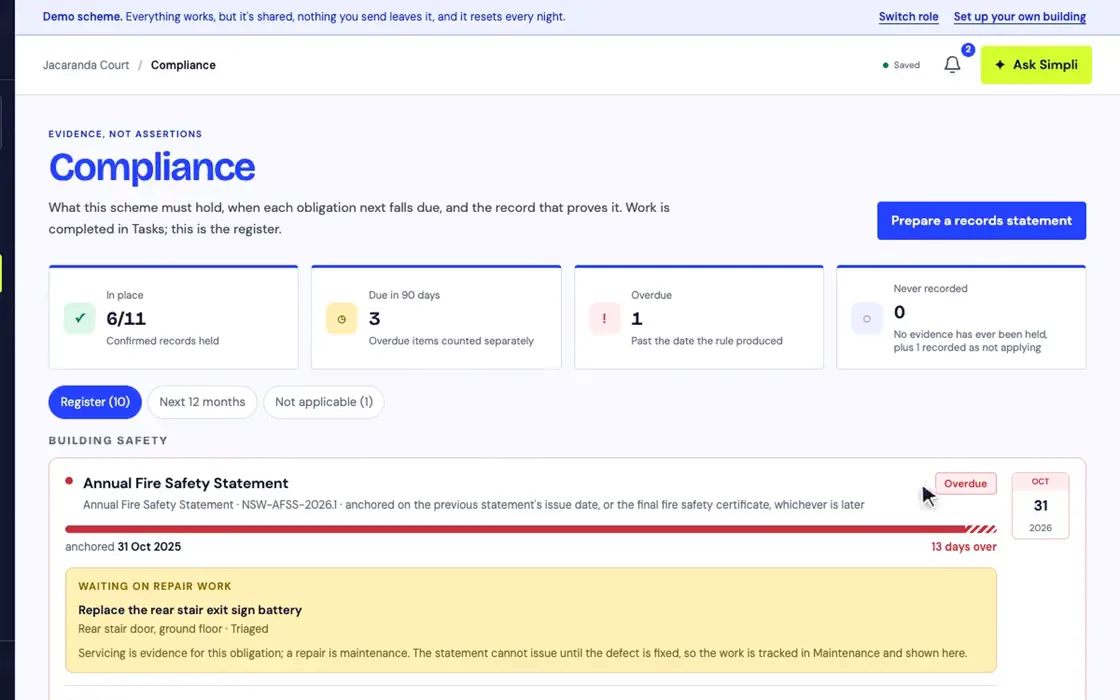
Screen recording · 11 secWhat’s due, and the record behind it Starting from the home page, the compliance register shows what is in place, what falls due in the next 90 days and what is overdue.
Recorded in Jacaranda Court, our fictional six-lot demo building. People and figures are sample data. - 04 / Records
Records and reporting.
Keep the evidence after a job is done, and keep it with the building, not in one person’s inbox. For schemes required to report, the Strata Hub return is due within three months of the AGM. Two-lot schemes are exempt from annual reporting from 1 October 2026.
Free tool · No account neededFind the records you’re missingAny date you skip in the due-date calendar becomes a record to ask for, so you finish with a checklist of what to find.
RecordsThe evidence behind each job, kept with the building- AGM minutesFiled
Sent to owners within seven days of the meeting
- Insurance certificate of currencyFiled
Renewed for the year ahead
- Strata Hub annual reportDue soon
Due within three months of the AGM
- Capital works fund planTo find
Nobody is sure where the last one is
Where it stands: the next committee can pick up from here, without asking around.
IllustrationRecords the next committee can find Each record shows whether it is filed, due or still to be found.
Example content to explain the workflow. Not a live account or an exact portal screen.
General information for NSW, checked against NSW Government guidance in November 2026. Not legal advice. Check the current NSW annual reporting guidance.
Free tools for self-managed strata.
Get the year’s dates, the next meeting and the budget ready before you sign up for anything. Each tool shows a result on screen and uses your own figures and dates.
Get the year’s strata due dates out of your head.
Start with the dates you know. Map the year ahead across 11 NSW obligations and see which records to find for the dates you’re missing.
Skip unknown dates · PDF + calendar file by emailBuild your due-date calendarTurn a blank page into a draft meeting agenda.
Prepare an AGM, general meeting or committee meeting in five steps. Get draft motions, a notice deadline and a minutes template to use at the meeting.
5 guided steps · PDF + minutes template by emailBuild your meeting agendaDraft the budget and plan for the big jobs ahead.
Add up a year of everyday costs, list the major works ahead, and see whether your capital works fund will cover them. Get the year’s contributions and a 10-year funding check.
Use your own figures · PDF by emailDraft your strata budget- Still have a strata manager?Compare your management fees with the cost of self-managing, using your own figures.
- Not sure how it’s going?Take the strata report card for a grade and questions to take to your committee.
SimpliStrata helps organise it. Your committee follows through.
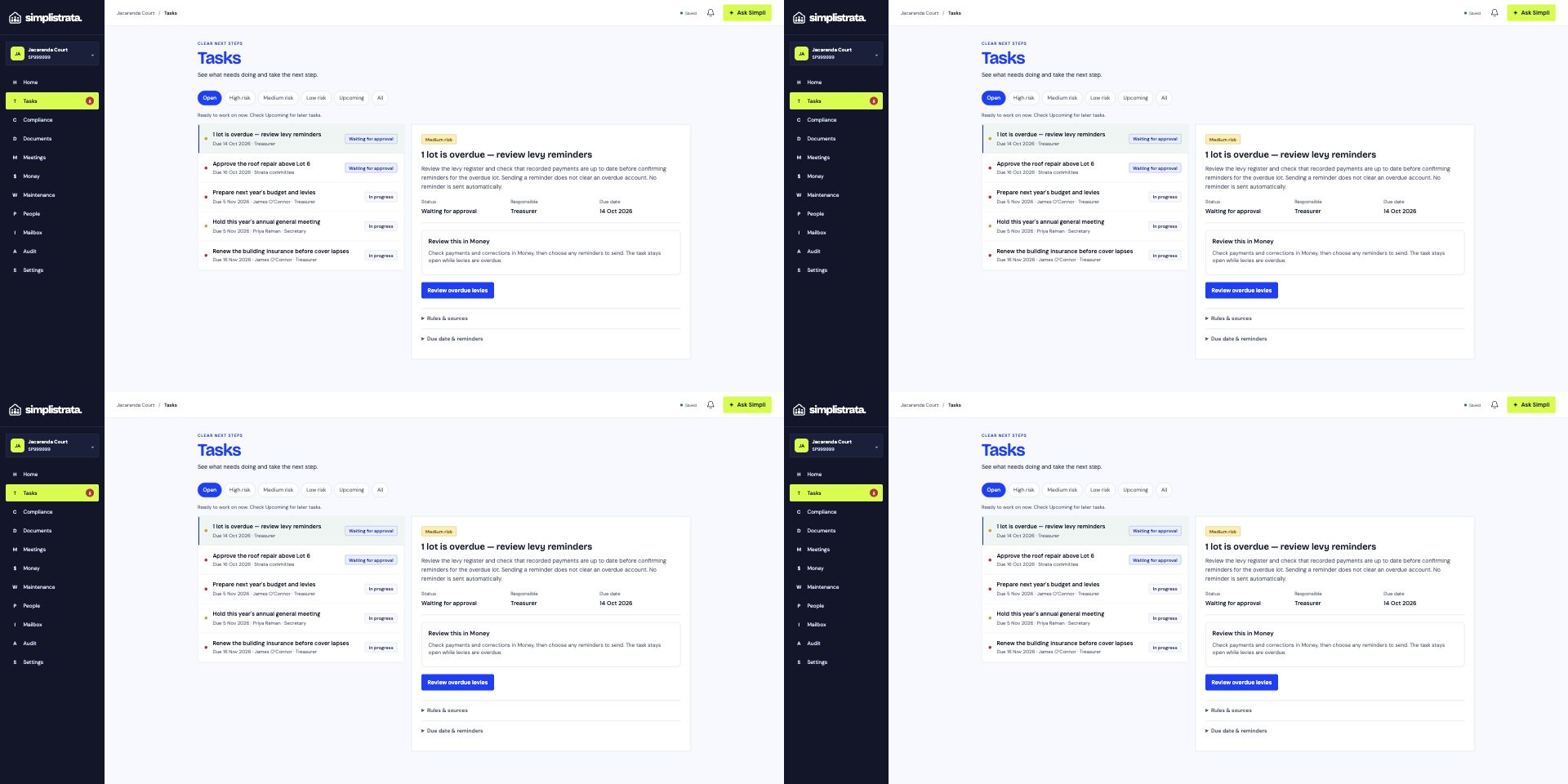
Guided tasks bring the due date, responsible person, relevant records and preparation steps together. Reminders help you plan ahead, and evidence stays with completed work.
Owners make decisions, check and issue notices, arrange qualified help, pay from the scheme’s bank account and submit official forms. An organised task list supports the work; it does not certify the building or guarantee compliance.
Questions self-managed committees ask.
Do we need a strata manager in NSW?
Not generally. An owners corporation can run its own scheme through its committee and office bearers. A compulsory management order can change that. NSW’s guide to strata roles explains who does what.
Is a self-managed strata the same as a self-managed body corporate or owners corporation?
In NSW, yes. The owners of a strata scheme together form the owners corporation, which older NSW documents and some other states call a body corporate. A self-managed owners corporation is one that runs the scheme itself, without a strata managing agent.
How do we start self-managing our strata?
If you have a strata manager, read the agreement, take the decision to the owners at a general meeting and plan the records handover. Then agree who handles correspondence, meetings, money and maintenance, find the key dates and put them in a shared due-date calendar.
Where should we start if nobody knows the dates?
Look for the last AGM minutes, insurance schedule, relevant fire safety records and capital works plan. Ask whoever currently holds the records to help fill the gaps. NSW’s record-keeping guidance explains the records schemes need to keep. Then enter what you find in the free due-date calendar; any date you skip becomes a record to ask for.
Is there software for self-managed strata?
Yes. SimpliStrata is an online platform for small self-managed NSW schemes. It brings tasks and due dates, meetings, bills, levies and records into one shared place. Your committee still makes the decisions, pays from the scheme’s own bank account and submits official forms. See how it works or check the pricing.
Is this a complete compliance check?
No. Requirements depend on your scheme, building and circumstances, and can change. Use the official sources linked from each item and get professional advice where you need it.
We still have a manager. Is this useful for us?
It shows the work your owners would take on. If you are considering the change, work through the switching guide, compare your management fees with the cost of self-managing, or take the strata report card to see how the current arrangement is going.
30 days to explore with your scheme. No credit card needed.